
STAINLESS STEEL GRADE
SUS 430 Stainless Steel
SUS 430 is a general-purpose ferritic stainless steel containing approximately 16–18% chromium. Unlike SUS 304 and SUS 316L, it normally contains little or no intentionally added nickel, making it a cost-effective material with less exposure to nickel-price fluctuations.
SUS 430 offers good corrosion resistance in mild indoor and atmospheric environments, good resistance to oxidation, useful formability, high thermal conductivity compared with austenitic stainless steel, and a naturally magnetic structure. It is commonly used for kitchen appliances, commercial food equipment, decorative panels, appliance components, automotive trim, indoor architectural elements, and other products where moderate corrosion resistance and cost control are important.
SUS 430 is commonly associated with AISI 430, ASTM Type 430, UNS S43000, and EN 1.4016.
MATERIAL INTRODUCTION
SUS 430 Stainless Steel Overview
SUS 430 is a chromium-based ferritic stainless steel. Its chromium content forms a passive oxide layer that protects the material against oxidation and corrosion in compatible environments.
Because it does not rely on high nickel content to maintain its structure, SUS 430 generally offers more stable material costs than nickel-containing austenitic grades. It also has lower thermal expansion and higher thermal conductivity than SUS 304, which can benefit appliance, cooking, heating, and temperature-cycling applications.
However, SUS 430 has lower corrosion resistance, ductility, weldability, and low-temperature toughness than SUS 304. It is best suited to carefully selected indoor, dry, mildly corrosive, or periodically cleaned environments.
SUS 430 Equivalent Grades
| Standard | Grade Designation |
|---|---|
| JIS | SUS 430 |
| AISI | 430 |
| ASTM / UNS | Type 430 / S43000 |
| EN | 1.4016 |
| EN Name | X6Cr17 |
Equivalent designations are broadly comparable but may differ in chemical limits, mechanical requirements, testing, dimensional tolerances, and certification. Confirm the governing material standard before ordering.
Key Characteristics of SUS 430
Cost-Effective Ferritic Grade
SUS 430 contains little or no intentionally added nickel, generally offering more stable and economical material costs than nickel-bearing SUS 304.
Good Corrosion Resistance in Mild Environments
Its 16–18% chromium content provides suitable corrosion resistance for many indoor, dry, mildly corrosive, and regularly cleaned applications.
Naturally Magnetic
SUS 430 has a ferritic microstructure and is magnetic, making it suitable for appliance panels, magnetic surfaces, equipment components, and enclosures.
Good Formability
The material can be bent, stamped, roll-formed, and moderately drawn. More demanding deep-drawing applications require careful tooling and material evaluation.
Lower Thermal Expansion
SUS 430 expands less than austenitic grades such as SUS 304, helping reduce distortion during heating and temperature cycling.
Higher Thermal Conductivity
It transfers heat more efficiently than SUS 304 and SUS 316L, benefiting selected cookware, heating components, appliances, and equipment panels.
Attractive Surface Appearance
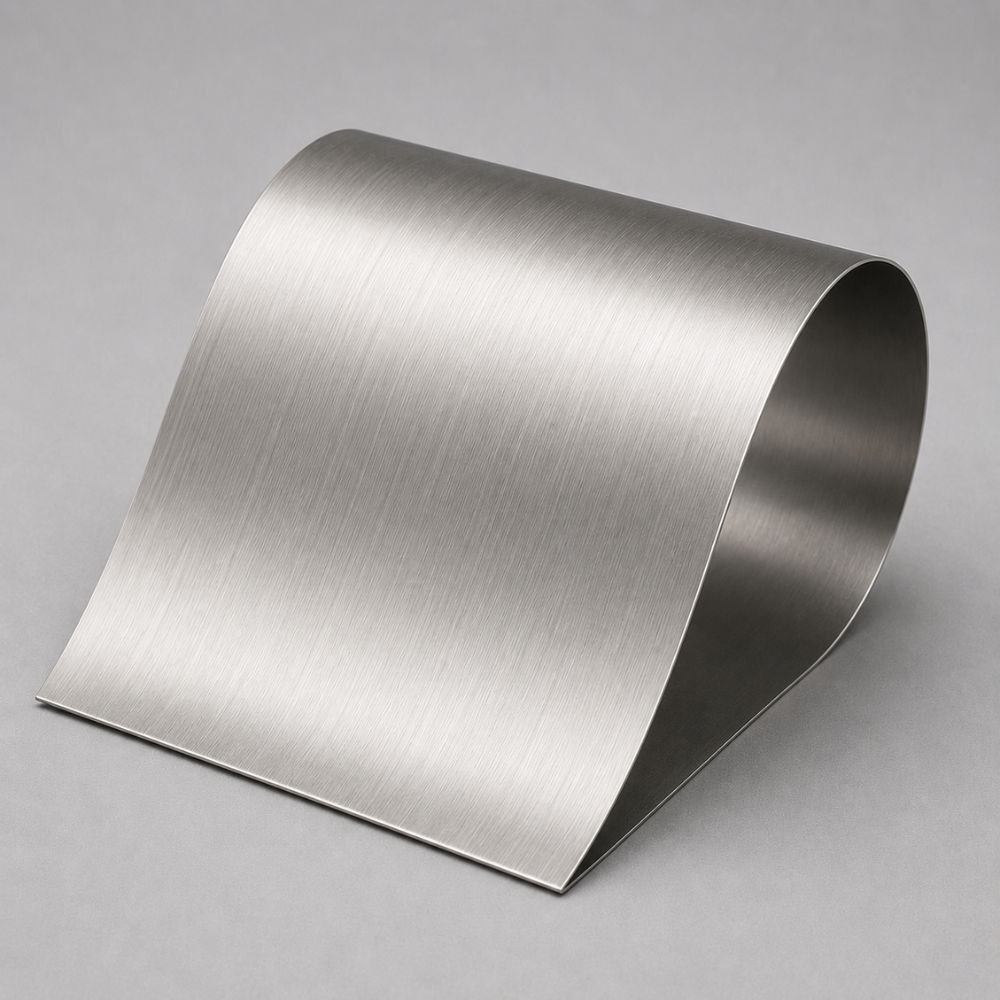
SUS 430 is available in finishes including 2B, BA, No.3, No.4, hairline, and polished surfaces for functional and decorative applications.
More Limited Weldability
SUS 430 can be welded, but requires greater process control than SUS 304. For extensively welded components, stabilized ferritic grades such as SUS 439 or SUS 441 may be more suitable.
SUS 430 Chemical Composition
| Element | Symbol | Minimum (wt.%) | Maximum (wt.%) |
|---|---|---|---|
| Carbon | C | — | 0.120 |
| Silicon | Si | — | 0.75 |
| Manganese | Mn | — | 1.00 |
| Phosphorus | P | — | 0.040 |
| Sulfur | S | — | 0.030 |
| Chromium | Cr | 16.00 | 18.00 |
| Iron | Fe | Balance | |
These are commonly referenced limits for SUS 430. Composition requirements may vary according to the applicable JIS, ASTM, EN, or customer specification. Final values should be confirmed using the governing standard and Mill Test Certificate.
SUS 430 Mechanical Properties
| Mechanical Property | Common Reference Value |
|---|---|
| 0.2% Proof Strength | ≥205 MPa |
| Tensile Strength | ≥420 MPa |
| Elongation | ≥22% |
| Rockwell Hardness | ≤88 HRB |
| Vickers Hardness | ≤200 HV |
Mechanical properties vary according to product form, thickness, material condition, rolling direction, heat treatment, test method, and governing specification. Cold working can increase strength and hardness while reducing ductility and forming capacity.
Physical Properties of SUS 430
| Physical Property | Typical Value |
|---|---|
| Density | Approximately 7.7 g/cm³ |
| Elastic Modulus | Approximately 200 GPa |
| Thermal Conductivity at Room Temperature | Approximately 26 W/m·K |
| Specific Heat | Approximately 460 J/kg·K |
| Mean Thermal Expansion | Approximately 10.4 µm/m·K |
| Electrical Resistivity | Approximately 0.60 µΩ·m |
| Magnetic Behavior | Magnetic |
These values are typical references and may vary according to temperature, product form, processing condition, and test method. Compared with SUS 304, SUS 430 generally offers higher thermal conductivity and lower thermal expansion.
SUS 430 vs. SUS 304
| Selection Factor | SUS 430 | SUS 304 |
|---|---|---|
| Stainless Steel Family | Ferritic | Austenitic |
| Main Alloy System | Chromium | Chromium-nickel |
| Nickel Content | Little or no intentionally added nickel | Approximately 8–10.5% |
| Magnetic Behavior | Magnetic | Generally non-magnetic when annealed; may become partially magnetic after cold working |
| General Corrosion Resistance | Moderate; suitable for many mild indoor environments | Better overall corrosion resistance |
| Chloride Resistance | Limited | Better than SUS 430, but still requires evaluation |
| Formability | Good for moderate forming | Better for deep drawing and complex forming |
| Weldability | More limited and requires careful process control | Excellent |
| Low-Temperature Toughness | More limited; not recommended for cryogenic service | Retains good toughness at low temperatures |
| Thermal Conductivity | Higher, approximately 26 W/m·K | Lower, approximately 16.2 W/m·K |
| Thermal Expansion | Lower, helping reduce thermal distortion | Higher |
| Typical Material Cost | Generally lower | Generally higher |
| Typical Applications | Appliances, indoor decorative panels, commercial kitchen components, equipment cabinets, and automotive trim | Food-processing equipment, tanks, piping, architecture, industrial equipment, and welded assemblies |
| Common Selection Reason | Cost-effective magnetic grade for mild environments | Better corrosion resistance, ductility, and weldability |
Choose SUS 430 for cost-sensitive indoor applications requiring moderate corrosion resistance, magnetic properties, decorative appearance, higher thermal conductivity, or lower thermal expansion.
Choose SUS 304 when the application requires better general corrosion resistance, deeper forming, extensive welding, or improved low-temperature toughness.
Neither grade is universally better. Final selection should consider moisture, chlorides, chemicals, forming severity, welding, temperature, surface finish, maintenance, and applicable material standards.
Corrosion Resistance of SUS 430
SUS 430 offers suitable corrosion resistance for many mild indoor, dry, and regularly cleaned environments. Its chromium content forms a passive surface layer that helps protect the underlying steel. However, SUS 430 has lower overall corrosion resistance than SUS 304 and should be carefully evaluated when moisture, chlorides, salt, or aggressive chemicals are present.
Commonly Suitable Environments
SUS 430 is frequently considered for:
- Dry indoor environments
- Household appliances
- Commercial kitchen equipment
- Interior decorative components
- Mild atmospheric exposure
- Periodically cleaned food-service surfaces
- Appliance panels and housings
- Selected nitric-acid environments
- Components with limited chloride exposure
Important Corrosion Limitations
SUS 430 may not be suitable for:
- Coastal outdoor environments
- Seawater or salt spray
- High-chloride food or cleaning chemicals
- Stagnant moisture
- Poorly drained crevices
- Strong acids
- Highly polluted industrial atmospheres
- Continuously wet outdoor applications
- Applications requiring SUS 304-level corrosion resistance
Maintaining SUS 430 Corrosion Resistance
- Keep surfaces clean, dry, and free from chloride deposits
- Avoid contamination from carbon-steel tools and grinding dust
- Remove fabrication residues and surface contamination
- Prevent stagnant moisture and poorly drained crevices
- Select an appropriate surface finish for the environment
- Use compatible cleaning chemicals and rinse surfaces thoroughly
- Establish an appropriate inspection and maintenance schedule
SUS 430 Stainless Steel Applications
Kitchen and Household Appliances
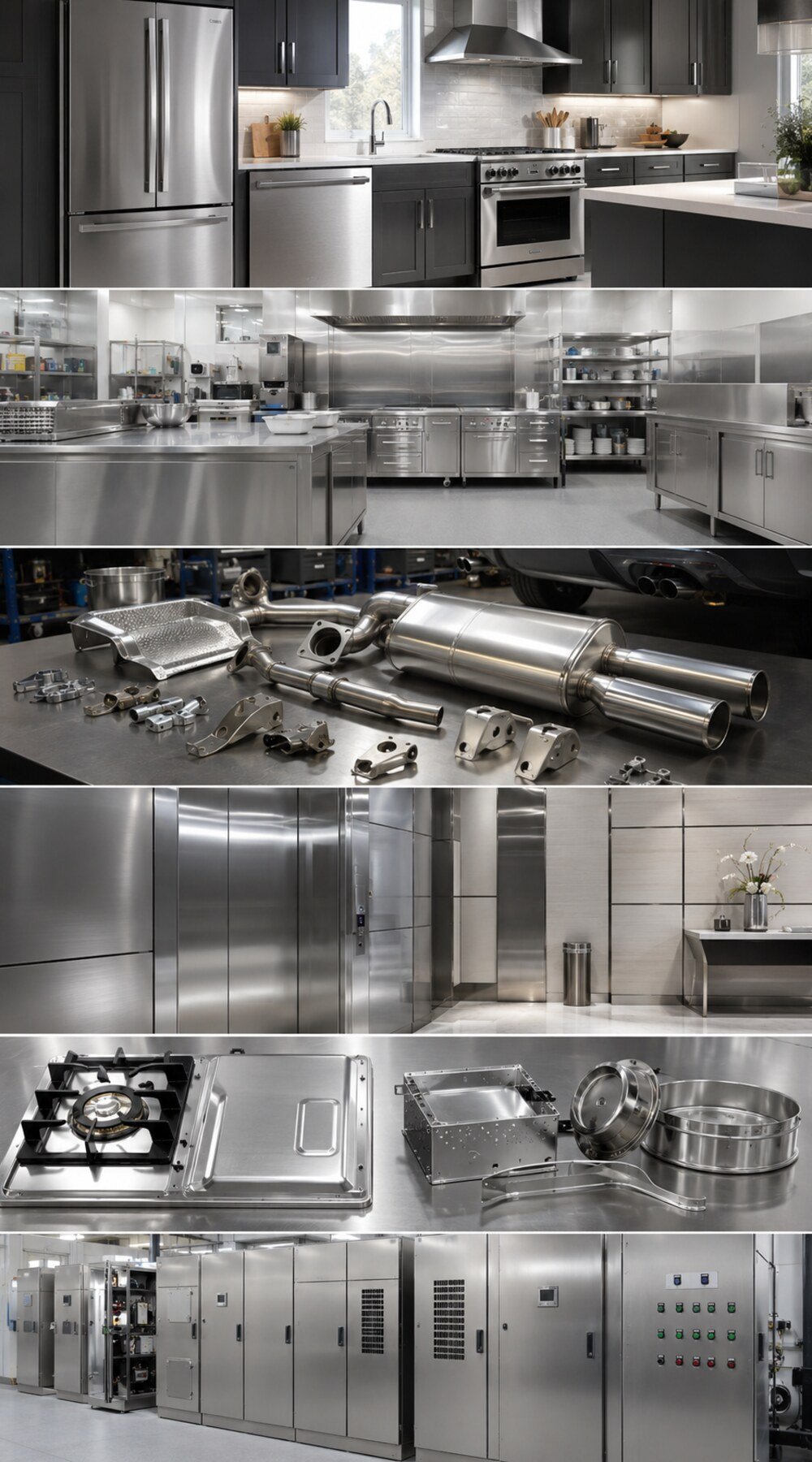
SUS 430 is widely used for refrigerator panels, dishwasher components, microwave liners, range-hood parts, oven panels, kitchen surfaces, and decorative appliance trim.
Commercial Food Equipment
Applications include equipment panels, cabinets, shelving, counters, splashbacks, housings, and components used in compatible food-service environments.
Automotive Components
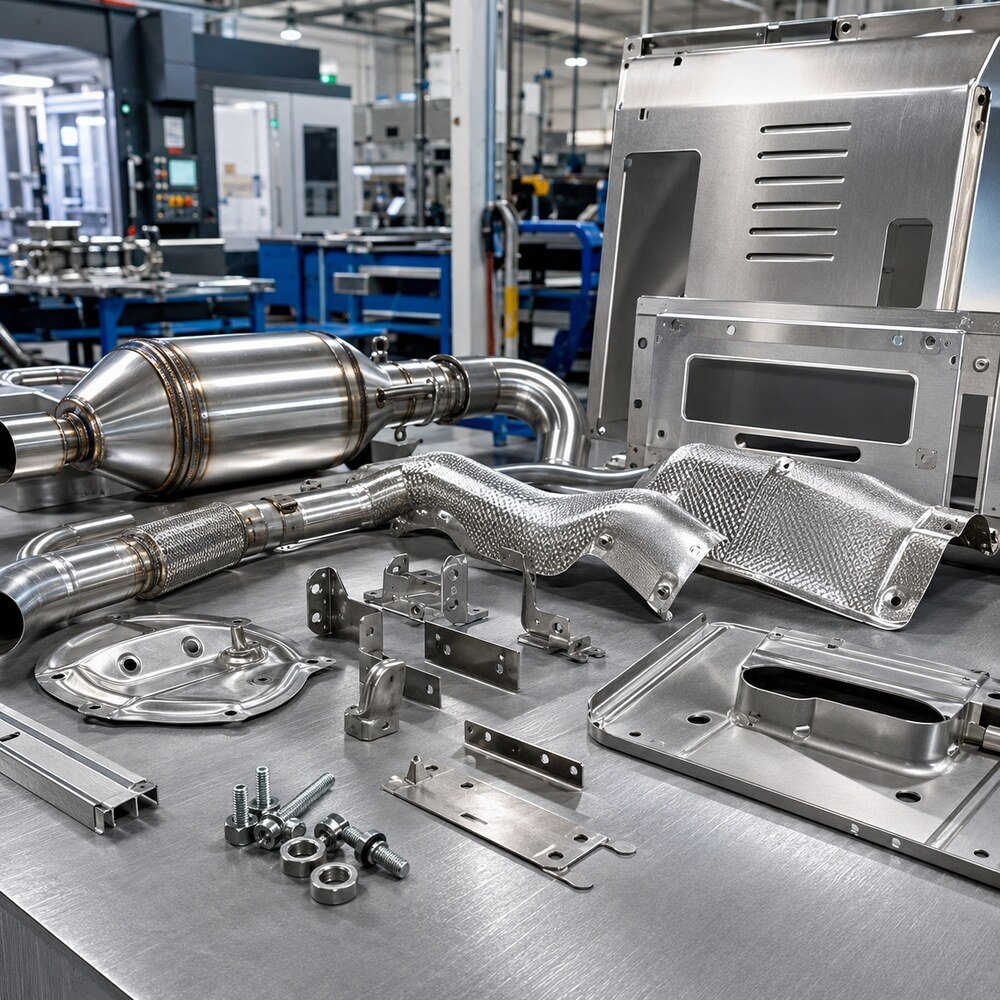
SUS 430 can be used for decorative trim, interior components, selected exhaust-related parts, clips, brackets, and other automotive components with compatible service requirements.
Architectural and Decorative Components
Common uses include interior panels, elevator decoration, wall trim, furniture, signs, fixtures, and indoor building hardware.
Heating and Appliance Components
Its relatively high thermal conductivity and low thermal expansion make SUS 430 suitable for selected burner parts, heat-resistant panels, appliance components, and temperature-cycling applications.
Electrical and Industrial Equipment
Applications include equipment cabinets, enclosures, covers, magnetic components, control-panel surfaces, and general fabricated parts.
faq
Stainless Steel CSP Material FAQ
Yes. SUS 430 is ferritic stainless steel and is naturally magnetic.
Nickel is not intentionally added as a principal alloying element. Small residual amounts may be permitted under certain specifications.
SUS 430 has good resistance in mild environments, but it can stain or corrode when exposed to chlorides, salt, stagnant moisture, aggressive chemicals, or improper maintenance.
SUS 430 is commonly used for food-service equipment and appliance components. Final suitability depends on food chemistry, temperature, cleaning chemicals, surface finish, and applicable regulations.
SUS 430 is magnetic, ferritic, generally lower-cost, and contains little or no intentionally added nickel. SUS 304 provides better corrosion resistance, formability, weldability, and low-temperature toughness.
Take Action