
Corrosion-Resistant Coil, Sheet and Strip for Cleanable Equipment and Durable Fabrication
Stainless Steel for Food Processing and Kitchen Equipment
Genn-Hann supplies stainless steel coil, sheet and strip for food-processing equipment, commercial kitchens, sinks, worktables, cabinets, storage systems, appliance components and fabricated parts. Customized cutting, slitting and surface-finishing options help manufacturers manage material dimensions, fabrication performance, cleanability and finished appearance.
Industry Introduction
Why Stainless Steel Is Used in Food Processing and Commercial Kitchens
Stainless steel provides a durable, non-porous surface that can be cleaned repeatedly when the correct grade, finish and fabrication practices are used. This makes it suitable for food-contact surfaces, worktables, sinks, cabinets, processing equipment and washdown environments.
Food-processing and commercial-kitchen equipment must withstand moisture, cleaning, impacts, temperature changes and repeated use. Stainless steel sheet and coil can be formed, welded and fabricated into durable equipment while maintaining a professional surface appearance.
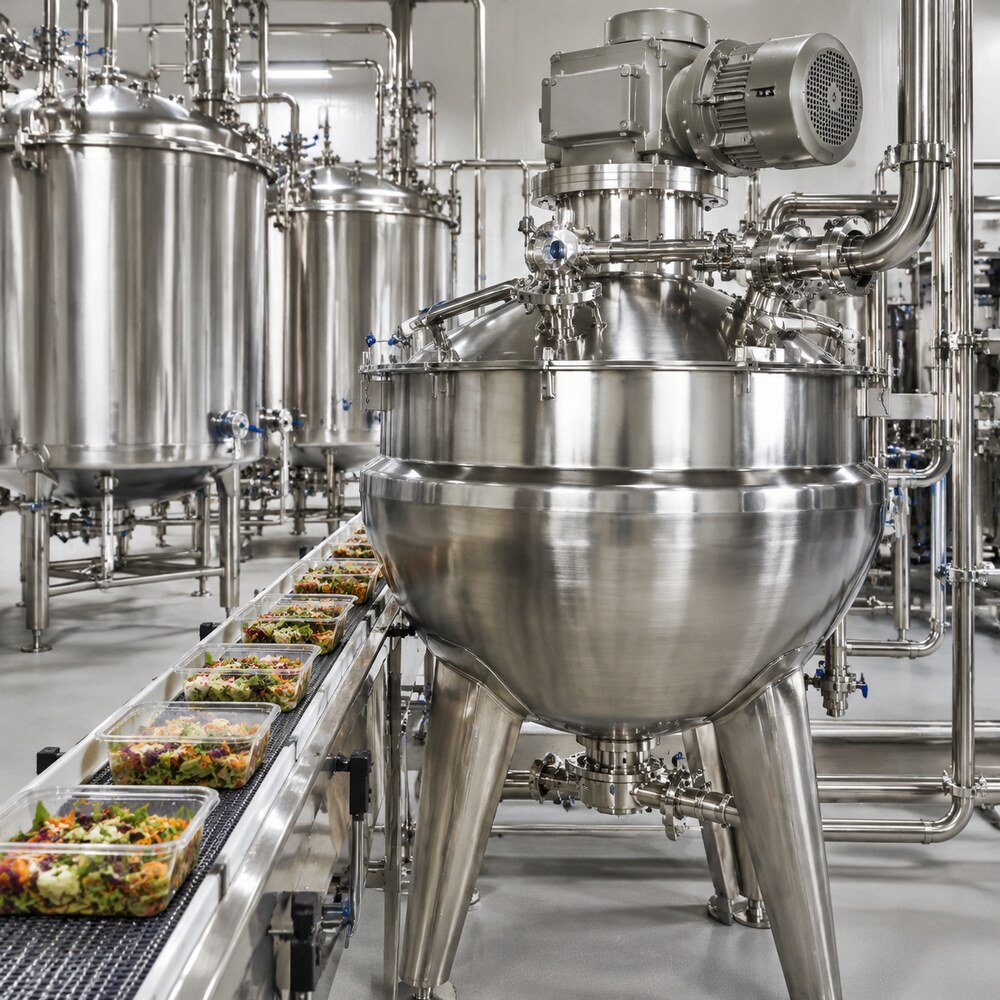
Material Solutions for Food-Contact Surfaces, Washdown Equipment and Commercial Kitchen Fabrication
Stainless Steel Applications in Food Processing and Kitchen Equipment
Stainless steel is used throughout food production and commercial kitchens because it combines corrosion resistance, cleanability, formability and durability. The appropriate grade and finish depend on food chemistry, chloride exposure, cleaning agents, temperature, fabrication and sanitation requirements.
| Application | Typical Uses |
|---|---|
| 01 Food-Processing Machinery and Equipment | Stainless steel sheet can support equipment covers, hoppers, guards, frames and selected product-contact components requiring cleanable and corrosion-resistant surfaces. |
| 02 Commercial Worktables and Preparation Surfaces | SUS 304 sheet is commonly considered for worktables, counters, preparation surfaces and fabricated kitchen stations exposed to repeated cleaning and daily use. |
| 03 Sinks, Wash Stations and Drainage Components | Formable stainless steel sheet supports sinks, wash basins, drainboards and related components exposed to water, detergents and food residues. |
| 04 Storage Tanks, Bins and Containers | Appropriate stainless steel grades may be fabricated into bins, containers, ingredient-storage systems and selected tanks based on the stored product and cleaning process. |
| 05 Cabinets, Shelving and Service Equipment | Stainless steel sheet supports cabinets, shelving, carts, serving counters and storage systems requiring durability and an easy-to-maintain surface. |
| 06 Kitchen Appliances and Internal Components | Stainless steel coil, sheet and strip may be used for appliance panels, housings, liners, brackets, burners and internal components subject to compatible heat and corrosion conditions. |
Compare Materials for Corrosion Resistance, Cleanability, Formability and Cost
Stainless Steel Grades for Food Processing and Kitchen Equipment
The appropriate stainless steel grade depends on food chemistry, chloride exposure, cleaning agents, temperature, fabrication method and whether the component contacts food. SUS 304 and 304L are widely considered for general food and kitchen equipment, while SUS 316 and 316L may be selected for more demanding corrosive conditions.
| Grade or Material | Typical Positioning for Electronics and Precision Components |
|---|---|
| SUS 301 | Commonly considered for springs, clips, clamps and formed components that require higher strength through cold working. Temper and hardness must be matched to the forming and spring requirements. |
| SUS 304 → / SUS 304L → | Versatile materials for housings, brackets, connector shells, covers and general precision components requiring corrosion resistance, formability and a durable surface. |
| SUS 316 / SUS 316L → | Considered for components exposed to more demanding chemical, chloride-bearing or humid environments. Suitability must be evaluated against the actual operating conditions. |
| SUS 430 → | A cost-conscious ferritic grade for selected housings, covers, brackets and magnetic components where its corrosion resistance and forming characteristics meet the application requirements. |
| SUS 201 / 202 → | Alternative austenitic grades for selected stamped and formed components where the required mechanical properties, corrosion exposure, fabrication method and cost targets are compatible. |
| CSP Material → | Cold-rolled stainless steel supplied in controlled hardness conditions for springs, clips and precision-formed components requiring defined strength or elastic behavior. |
| Technical note: Material selection should account for mechanical loading, forming method, springback, fatigue requirements, corrosion exposure, magnetic response, surface finish, plating and customer specifications. Contact Genn-Hann for material-selection support. | |
Available Stainless Steel Material Forms
Stainless Steel Strip
Cold rolled stainless steel precision strips for stamping, electronics components, springs, clips, brackets, clamps, fasteners, and small metal parts.
Stainless Steel Coil
Cold rolled and hot rolled stainless steel coils for slitting, cutting, polishing, and customized downstream processing. Suitable for manufacturers that need stable material supply, flexible dimensions, and consistent surface quality.
Stainless Steel Sheet
Cold rolled stainless steel sheets and hot rolled stainless steel plates for panels, covers, machinery parts, appliance components, fabrication, and visible stainless steel products.
Cold Rolled Stainless Steel Hardness CSP material
Cold rolled stainless steel hardness CSP material for applications that require strength, elasticity, hardness stability, and precision performance, such as springs, clips, terminals, brackets, electronics components, and precision stamped parts.
Customized Stainless Steel Slitting, Cutting and Surface Finishing for Cleanable, Consistent Equipment Production
Precision Processing for Food Equipment Manufacturing Supply Chains
Control Material Quality Before Fabrication
Prepared for Food and Kitchen Equipment Manufacturing
| Capability | Processing Range | Benefit for Food Equipment Manufacturing |
|---|---|---|
| Material Thickness | 0.10–6.00 mm |
Supports thin appliance components through to work surfaces, cabinets, hoppers and heavier fabricated equipment parts. |
| Precision Slitting Width | Down to 4 mm |
Supports narrow brackets, clips, clamps, reinforcement parts and precision-stamped appliance components. |
| Coil Width | Up to 1,600 mm |
Provides material flexibility for appliance panels, sink production, roll forming and larger fabricated equipment. |
| Shearing Length | Up to 6,000 mm |
Supports long work surfaces, counters, panels, guards and fabricated food-processing equipment. |
| Precision Coil Slitting | Customized |
Prepares stainless steel coil to specified widths for stamping, roll forming and automated equipment production. |
| Sheet Cutting | Cut to Length |
Supplies sheet dimensions suited to forming, welding, equipment fabrication and assembly. |
| Surface Polishing | No.3, No.4, HL, SB |
Supports visible kitchen equipment and fabricated components requiring a controlled and consistent surface appearance. |
| Stainless Steel Series | 200 / 300 / 400 |
Enables material selection based on corrosion resistance, formability, temperature, magnetic response and cost. |
| Material and Order Control | ERP Supported |
Supports recurring orders, inventory visibility, processing coordination and supply continuity. |
Processing note: Genn-Hann supplies and processes stainless steel material. Food-contact suitability, sanitary fabrication, weld finishing, cleaning validation and finished-equipment compliance remain the responsibility of the equipment manufacturer.
Why Food Manufacturers Choose Genn-Hann
Genn-Hann combines stainless steel material knowledge, customized processing, inventory support and production control to help food-processing and kitchen-equipment manufacturers manage dimensional consistency, surface requirements and recurring material demand.
Material Selection Support
Guidance on stainless steel grades, product forms, finishes and dimensions based on the component’s intended use and fabrication requirements.
Customized Processing
Precision slitting, cut-to-length sheet processing and polishing for customized thickness, width, length and surface specifications.
Quality-Controlled Production
Inspection equipment, production monitoring and documented process control help maintain dimensional and surface consistency.
Automated Warehousing and ERP Control
Integrated inventory and order management improve material tracking, processing coordination and response times.
Flexible Material Supply
Access to 200, 300 and 400-series stainless steel in coil, sheet, strip and CSP material forms.
Global Delivery Support
Export experience and flexible land, sea and air logistics support customers across international manufacturing supply chains.
Information to Provide When Requesting Stainless Steel
Complete Specifications Help Us Recommend the Right Material and Processing Solution
Providing complete technical and commercial requirements allows Genn-Hann to review material suitability, confirm processing capabilities and prepare a more accurate quotation. Include the intended application, stainless steel grade, dimensions, tolerances, surface requirements, order quantity and delivery destination whenever possible.
Intended Application
Describe the component, equipment or operating environment in which the stainless steel will be used.
Stainless Steel Grade
Specify the required grade, such as SUS 304, 304L, 316L, 301, 430 or another customer-approved material.
Applicable Material Standard
Include the required ASTM, JIS, EN or customer-specific material standard when applicable.
Product Form
Indicate whether the material is required as stainless steel coil, sheet, precision strip or CSP material.
Dimensions and Tolerances
Provide the required thickness, width, length and acceptable dimensional tolerances.
Temper or Hardness
State the required temper, hardness range or mechanical-property requirements for formed or spring components.
Surface Finish
Specify the required surface condition or finish, such as 2B, BA, No.3, No.4, Hairline or SB.
Edge and Flatness Requirements
Include any requirements for slit-edge condition, burr control, flatness, sheet shape or coil configuration.
Surface Protection and Packaging
Identify protective-film, paper-interleaving, moisture protection, labeling or export-packaging requirements.
Fabrication Method
Explain whether the material will be stamped, formed, welded, polished, laser cut or processed using another manufacturing method.
Order Quantity
Provide the estimated quantity, preferred coil weight, sheet count or expected recurring demand.
Delivery Requirements
Include the destination country, requested delivery date and any preferred shipping or documentation requirements.
Need help preparing your specification? Send the available drawings, material requirements or application details to Genn-Hann for review. Contact our material specialists.
faq
Frequently Asked Questions About Stainless Steel for Food Equipments and Components
01 Is SUS 304 suitable for all food-processing applications?
No. SUS 304 is widely used for food-processing equipment, but it is not suitable for every environment. Chlorides, salt deposits, acidic products, elevated temperatures and aggressive cleaning chemicals can increase the risk of localized corrosion.
There is no universal chloride limit. Suitability depends on concentration, temperature, pH, contact time, deposits, equipment design and cleaning procedures.
02 Why does SUS 316L resist corrosion better than SUS 304?
SUS 316L normally contains approximately 2–3% molybdenum. This improves resistance to pitting and crevice corrosion in many chloride-containing environments.
Final compatibility must still be evaluated against the food product, cleaning chemicals, temperature and operating conditions.
03 Is SUS 316L worth its higher initial cost?
It can be in demanding environments. Improved corrosion resistance may reduce maintenance, production interruptions and premature equipment replacement.
The selection should be based on lifecycle cost and actual operating conditions rather than material price alone.
04 Does welding affect stainless steel corrosion resistance?
Yes. Welding can introduce heat tint, contamination, sensitization, distortion and crevices that reduce corrosion resistance or cleanability.
Low-carbon grades such as 304L and 316L reduce sensitization risk, but correct welding, shielding, post-weld cleaning, finishing and passivation may still be required.
05 What is hygienic or sanitary equipment design?
Hygienic design means designing equipment so food-contact and surrounding surfaces can be effectively cleaned, sanitized, inspected and maintained.
It includes adequate drainage and the elimination of cracks, crevices, dead zones and product-retention points.
06 Why is surface finish important for food equipment?
Surface condition affects cleanability, product release, corrosion performance and residue accumulation. Rough or damaged surfaces can be more difficult to clean consistently.
Many sanitary equipment standards specify product-contact surfaces equivalent to or smoother than 0.8 µm Ra. Ra alone is not sufficient—the surface should also be free from pits, cracks, folds and crevices.
07 How should food-processing equipment be installed for cleaning?
Equipment should provide access for inspection, cleaning and sanitizing while supporting drainage and avoiding inaccessible gaps where water or food residue can collect.
Required wall and floor clearances depend on the equipment design, manufacturer instructions and applicable local regulations.
08 What are the core EHEDG hygienic-design principles?
Core principles include suitable material selection, cleanability, drainability, accessibility and prevention of product retention and microbial growth.
Equipment should avoid dead legs, crevices and poorly drained areas and use hygienic joints, seals and validated cleaning procedures.
09 Is stainless steel safe for food-contact equipment?
Appropriate stainless steel grades are widely used for food-contact equipment because they provide corrosion resistance, durability and cleanability.
Suitability depends on the grade, surface condition, fabrication quality, intended food, temperature, contact time, cleaning chemicals and applicable regulations.
10 What is stainless steel passivation?
Passivation is a controlled post-fabrication chemical treatment that removes free iron and certain surface contaminants and supports the corrosion-resistant passive surface.
It does not correct unsuitable material selection, defective welding, deep scratches, crevices or poor hygienic design.
11 How should stainless steel food equipment be maintained?
Maintenance should combine documented cleaning and sanitation procedures with regular inspection for cracks, pitting, damaged welds, leaks, failed seals, standing water and accumulated residue.
Surfaces that cannot be effectively cleaned, repaired or maintained require corrective action or replacement.
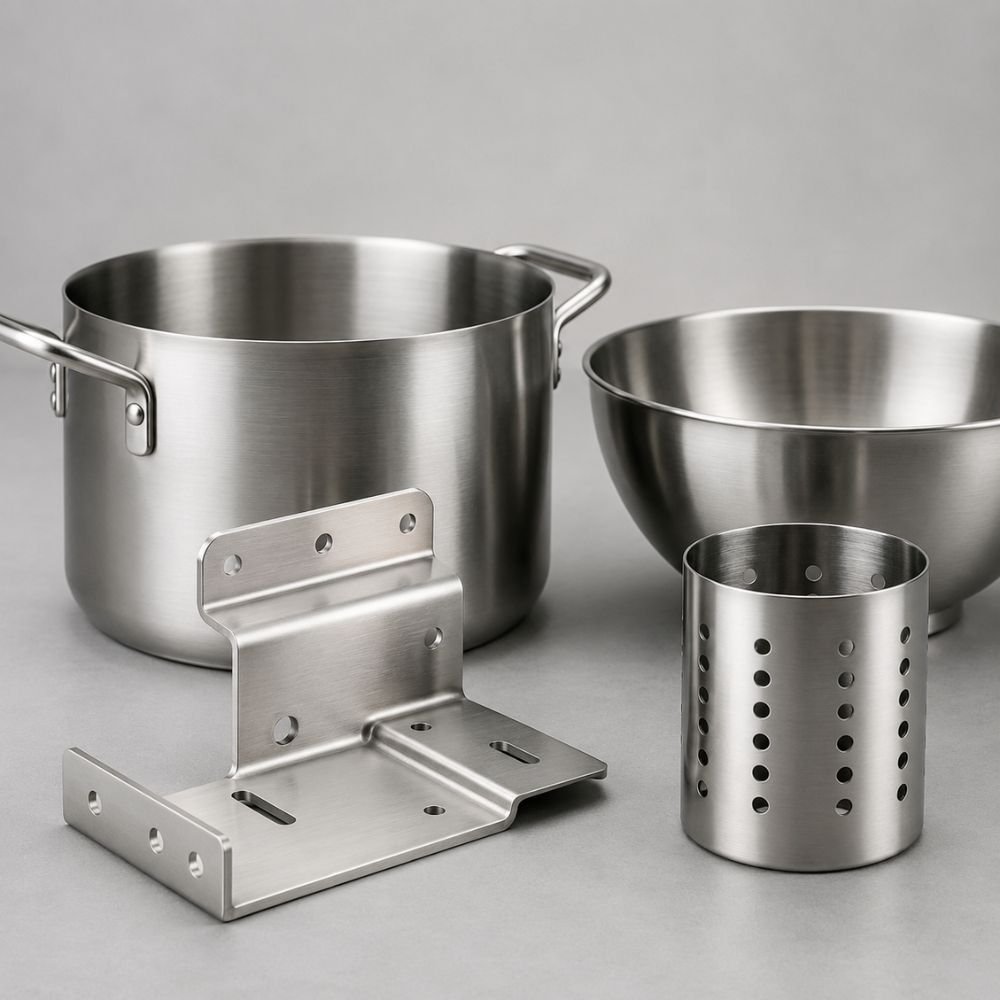
Take Action