
Precision Coil, Sheet and Strip for Stamping, Forming and High-Volume Component Manufacturing
Stainless Steel for Electronics & Precision Components
Genn-Hann supplies precision stainless steel coil, sheet, strip and CSP materials for electronic components, connectors, shielding parts, springs, clips, brackets, housings and production equipment. Customized slitting, cutting, hardness and surface options help component manufacturers maintain dimensional consistency, forming performance and repeatable production quality.
MATERIAL PERFORMANCE
Why Stainless Steel Is Used in Electronics and Precision Components
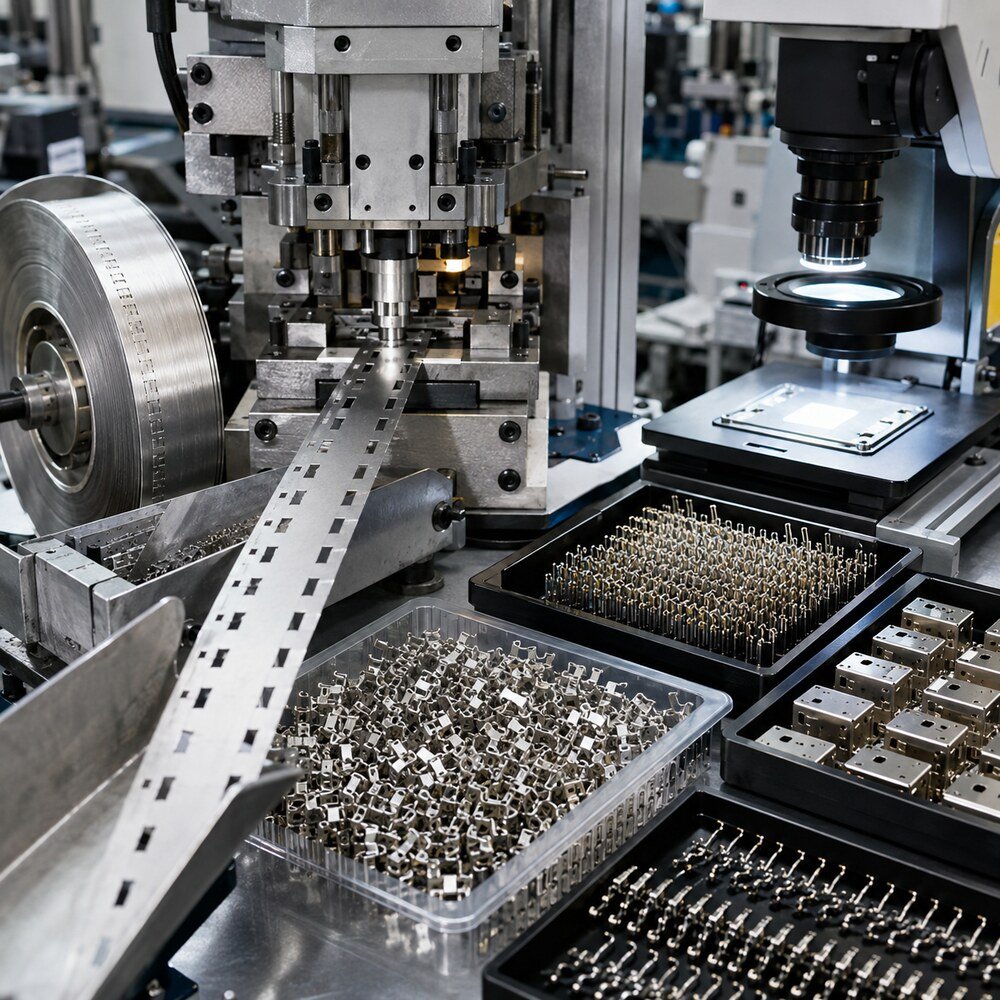
Electronic and precision components often require thin materials capable of being stamped, bent or formed into compact geometries. Stainless steel combines mechanical strength, formability, corrosion resistance and surface durability, making it useful for connector shells, retention clips, brackets, springs, covers and equipment housings.
Stable thickness, width, hardness, flatness and edge condition help manufacturers control stamping, forming, springback and assembly. Precision-processed stainless steel strip and coil support repeatable feeding and production across high-volume component manufacturing.
Application Breakdown
Stainless Steel Applications in Electronics and Precision Components
Stainless steel is used where electronic and precision components require a combination of strength, corrosion resistance, controlled hardness, dimensional consistency or a durable finished surface. The appropriate grade and material condition depend on the component’s mechanical, electrical, magnetic and fabrication requirements.
| Application | Typical Uses |
|---|---|
|
01
Connector Shells and Retention Components
|
Precision stainless steel strip can be stamped and formed into connector shells, locking features, retention clips and supporting components requiring strength and dimensional stability. |
|
02
Springs, Clips and Contact-Support Components
|
SUS 301 and CSP materials can support springs, clips, clamps and selected contact-support components requiring controlled hardness, elasticity and fatigue performance. |
|
03
Shielding Covers and Protective Cans
|
Thin stainless steel sheet and strip may be formed into protective covers and shielding structures where mechanical protection, corrosion resistance and enclosure integrity are required. |
|
04
Electronic Housings and Chassis
|
Stainless steel sheet can be fabricated into housings, chassis, control boxes, panels and covers for electronic and industrial equipment. |
|
05
Precision Stamped Brackets and Fastening Components
|
Customized strip supports brackets, mounting tabs, washers, clamps and other stamped components requiring consistent dimensions and forming behavior. |
|
06
Sensor and Instrument Components
|
Stainless steel can support sensor housings, protective covers, mounting parts and precision structures exposed to handling, humidity or industrial environments. |
Compare Materials for Formability, Spring Performance, Corrosion Resistance and Cost
Stainless Steel Grades for Electronics and Precision Components
The appropriate stainless steel grade depends on whether the component must provide spring force, retain its shape after forming, resist corrosion, respond to magnets or achieve a specific surface appearance. For precision components, temper, hardness, thickness tolerance and rolling direction can be as important as the base grade.
| Grade or Material | Typical Positioning for Electronics and Precision Components |
|---|---|
| SUS 301 | Commonly considered for springs, clips, clamps and formed components that require higher strength through cold working. Temper and hardness must be matched to the forming and spring requirements. |
| SUS 304 → / SUS 304L → | Versatile materials for housings, brackets, connector shells, covers and general precision components requiring corrosion resistance, formability and a durable surface. |
| SUS 316 / SUS 316L → | Considered for components exposed to more demanding chemical, chloride-bearing or humid environments. Suitability must be evaluated against the actual operating conditions. |
| SUS 430 → | A cost-conscious ferritic grade for selected housings, covers, brackets and magnetic components where its corrosion resistance and forming characteristics meet the application requirements. |
| SUS 201 / 202 → | Alternative austenitic grades for selected stamped and formed components where the required mechanical properties, corrosion exposure, fabrication method and cost targets are compatible. |
| CSP Material → | Cold-rolled stainless steel supplied in controlled hardness conditions for springs, clips and precision-formed components requiring defined strength or elastic behavior. |
| Technical note: Material selection should account for mechanical loading, forming method, springback, fatigue requirements, corrosion exposure, magnetic response, surface finish, plating and customer specifications. Contact Genn-Hann for material-selection support. | |
Available Stainless Steel Material Forms
Stainless Steel Strip
Cold rolled stainless steel precision strips for stamping, electronics components, springs, clips, brackets, clamps, fasteners, and small metal parts.
Stainless Steel Coil
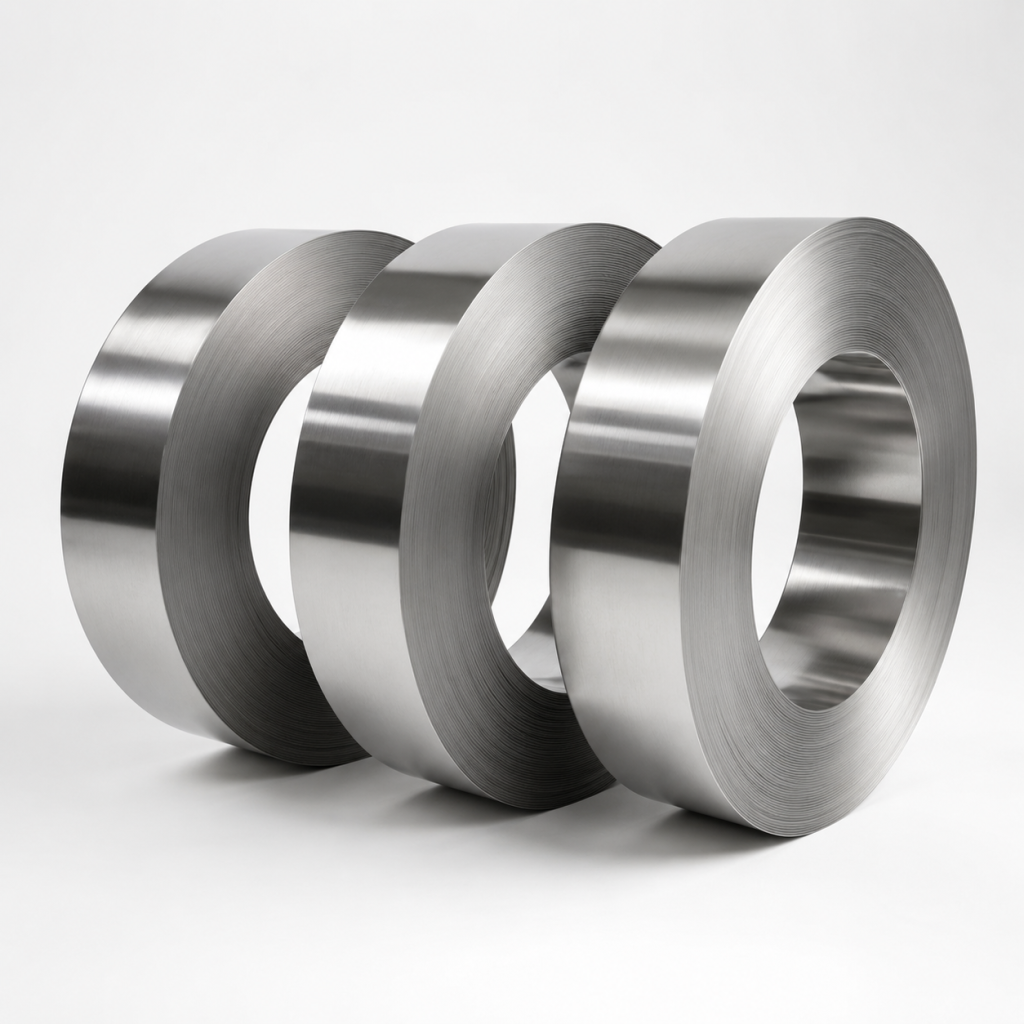
Cold rolled and hot rolled stainless steel coils for slitting, cutting, polishing, and customized downstream processing. Suitable for manufacturers that need stable material supply, flexible dimensions, and consistent surface quality.
Stainless Steel Sheet
Cold rolled stainless steel sheets and hot rolled stainless steel plates for panels, covers, machinery parts, appliance components, fabrication, and visible stainless steel products.
Cold Rolled Stainless Steel Hardness CSP material
Cold rolled stainless steel hardness CSP material for applications that require strength, elasticity, hardness stability, and precision performance, such as springs, clips, terminals, brackets, electronics components, and precision stamped parts.
Customized Stainless Steel Slitting, Cutting and Surface Finishing for Repeatable Component Production
Precision Processing for Electronics Manufacturing Supply Chains
Control Material Quality Before Stamping Begins
Prepared for Precision Component Manufacturing
| Capability | Processing Range | Benefit for Electronics Manufacturing |
|---|---|---|
| Material Thickness | 0.10–6.00 mm |
Supports thin stamped components, electronic housings and heavier equipment structures across different production requirements. |
| Precision Slitting Width | Down to 4 mm |
Supports narrow springs, clips, connector parts, brackets and other compact precision-stamped components. |
| Coil Width | Up to 1,600 mm |
Provides material flexibility for continuous production, larger housings and high-volume component manufacturing. |
| Shearing Length | Up to 6,000 mm |
Supports electronic panels, chassis, cabinets and longer fabricated equipment structures. |
| Precision Coil Slitting | Customized |
Prepares stainless steel coil to specified widths for progressive stamping, automated feeding and continuous production. |
| Sheet Cutting | Cut to Length |
Supplies sheet dimensions suited to enclosure fabrication, forming, welding and equipment assembly. |
| Surface Polishing | No.3, No.4, HL, SB |
Supports visible housings, control panels and equipment components requiring a consistent finished appearance. |
| Stainless Steel Series | 200 / 300 / 400 |
Enables selection based on strength, corrosion resistance, formability, magnetic response and cost. |
| Material and Order Control | ERP Supported |
Supports inventory visibility, processing coordination and consistent order management across recurring production needs. |
Processing note: Available dimensions, tolerances, hardness conditions, edge quality, surface finishes and protective-film options depend on the selected grade, product form, processing line and order specification.
Why High-Tech Manufacturers Choose Genn-Hann
Genn-Hann combines stainless steel expertise, precision processing, quality-controlled production and inventory support to help high-tech manufacturers manage material consistency and procurement requirements. From grade selection and customized dimensions to surface finishing and international delivery, each order is prepared around the customer’s manufacturing specifications.
Material Selection Support
Guidance on stainless steel grades, product forms, finishes and dimensions based on the component’s intended use and fabrication requirements.
Customized Processing
Precision slitting, cut-to-length sheet processing and polishing for customized thickness, width, length and surface specifications.
Quality-Controlled Production
Inspection equipment, production monitoring and documented process control help maintain dimensional and surface consistency.
Automated Warehousing and ERP Control
Integrated inventory and order management improve material tracking, processing coordination and response times.
Flexible Material Supply
Access to 200, 300 and 400-series stainless steel in coil, sheet, strip and CSP material forms.
Global Delivery Support
Export experience and flexible land, sea and air logistics support customers across international manufacturing supply chains.
Information to Provide When Requesting Stainless Steel
Complete Specifications Help Us Recommend the Right Material and Processing Solution
Providing complete technical and commercial requirements allows Genn-Hann to review material suitability, confirm processing capabilities and prepare a more accurate quotation. Include the intended application, stainless steel grade, dimensions, tolerances, surface requirements, order quantity and delivery destination whenever possible.
Intended Application
Describe the component, equipment or operating environment in which the stainless steel will be used.
Stainless Steel Grade
Specify the required grade, such as SUS 304, 304L, 316L, 301, 430 or another customer-approved material.
Applicable Material Standard
Include the required ASTM, JIS, EN or customer-specific material standard when applicable.
Product Form
Indicate whether the material is required as stainless steel coil, sheet, precision strip or CSP material.
Dimensions and Tolerances
Provide the required thickness, width, length and acceptable dimensional tolerances.
Temper or Hardness
State the required temper, hardness range or mechanical-property requirements for formed or spring components.
Surface Finish
Specify the required surface condition or finish, such as 2B, BA, No.3, No.4, Hairline or SB.
Edge and Flatness Requirements
Include any requirements for slit-edge condition, burr control, flatness, sheet shape or coil configuration.
Surface Protection and Packaging
Identify protective-film, paper-interleaving, moisture protection, labeling or export-packaging requirements.
Fabrication Method
Explain whether the material will be stamped, formed, welded, polished, laser cut or processed using another manufacturing method.
Order Quantity
Provide the estimated quantity, preferred coil weight, sheet count or expected recurring demand.
Delivery Requirements
Include the destination country, requested delivery date and any preferred shipping or documentation requirements.
Need help preparing your specification? Send the available drawings, material requirements or application details to Genn-Hann for review. Contact our material specialists.
faq
Frequently Asked Questions About Stainless Steel for Electronics and Precision Components
What are the benefits of 0.10 mm stainless steel strip in precision electronics?
A thickness of 0.10 mm supports compact, lightweight component designs where material space is limited. Potential applications include thin springs, clips, shielding structures and sensor components. Performance still depends on the selected grade, temper, geometry and fabrication process.
Which stainless steel grades are suitable for electronic applications?
SUS 304 is commonly considered for housings, brackets, covers and general stamped components. SUS 301 and CSP materials are often selected for springs and clips requiring controlled hardness. SUS 316L may be considered for more corrosive environments, while SUS 430 can support selected magnetic or cost-sensitive components.
How does heat treatment affect thin stainless steel components?
Heat treatment can change hardness, residual stress, dimensional stability, corrosion resistance and magnetic response. The outcome depends on the stainless steel grade, prior cold work, temperature, holding time and cooling method. The heat-treatment cycle should be developed and validated for the specific component.
What are common applications for 0.10 mm stainless steel strip?
Thin stainless steel strip may be used for miniature springs, clips, sensor diaphragms, connector shells, shielding structures and other precision-stamped components. Suitability depends on thickness tolerance, hardness, flatness, edge condition and finished-component requirements.
Is austenitic stainless steel always non-magnetic?
No. Austenitic grades such as annealed SUS 304 and 316L are generally considered essentially non-magnetic, but cold rolling, stamping, forming and welding can produce measurable magnetic response. Components with strict permeability requirements should be tested after processing.
What are the main challenges when manufacturing miniature stainless steel components?
Common challenges include tool wear, small-feature accuracy, burr control, strip tracking, springback and dimensional variation. Material thickness, width tolerance, camber, flatness, hardness and edge condition should be matched to the tooling and component design.
Why are surface condition and flatness important for precision electronic components?
Surface defects can affect appearance, plating, assembly and contact with adjacent components. Poor flatness can cause feeding, alignment or warping problems during stamping and assembly. Required surface roughness and flatness should be defined by the component drawing or customer specification.
How can stainless steel contribute to EMI shielding?
Stainless steel can be formed into covers, cans, meshes and enclosures that contribute to electromagnetic shielding. Actual performance depends on conductivity, magnetic permeability, thickness, frequency, enclosure geometry, seams, openings and grounding. Stainless steel grade alone does not determine shielding effectiveness.
When should ferritic or martensitic stainless steel be considered instead of austenitic stainless steel?
Ferritic grades such as SUS 430 may be considered when magnetic response, cost and moderate corrosion resistance are important. Martensitic grades may be selected for components requiring greater hardness or wear resistance. Austenitic grades remain useful where formability and corrosion resistance are priorities.
How is stainless steel used to control static electricity in electronics manufacturing?
Stainless steel fibers and fine wire products can be incorporated into conductive fabrics, brushes, meshes and belts that help dissipate static charge when correctly connected to ground. ESD performance depends on the complete product design and grounding system, not simply the presence of stainless steel.
Take Action