
STAINLESS STEEL STRIP
Precision Stainless Steel Strip for Stamping, Electronics, and Industrial Parts
Genn-Hann Stainless Steel supplies cold rolled stainless steel strips for manufacturers that require accurate width, stable thickness, reliable hardness, and consistent surface quality. With precision slitting capability down to 4 mm width and material thickness from 0.10 mm, Genn-Hann supports metal stamping, electronics components, automotive parts, springs, clamps, fasteners, and precision hardware applications.
Our Product Grade
Quick Product Information
Cold rolled stainless steel precision strips for stamping, electronics components, springs, clips, brackets, clamps, fasteners, and small metal parts.
Grades: 200 / 300 / 400 series stainless steel, including 304, 304L, 316, 316L, 430, 409L, 439, 201, and 202.
Standards: ASTM A240 / A480, JIS G4305, EN 10204 3.1, EN 10028-7, and EN 10088-2 available.
Finishes: 2B, BA, No.3, No.4, No.5, HL, and SB.
Capability: 0.10–2.00 mm thickness, precision slitting width from 4–650 mm, with 300 mm / 400 mm / 508 mm coil inner diameter options.
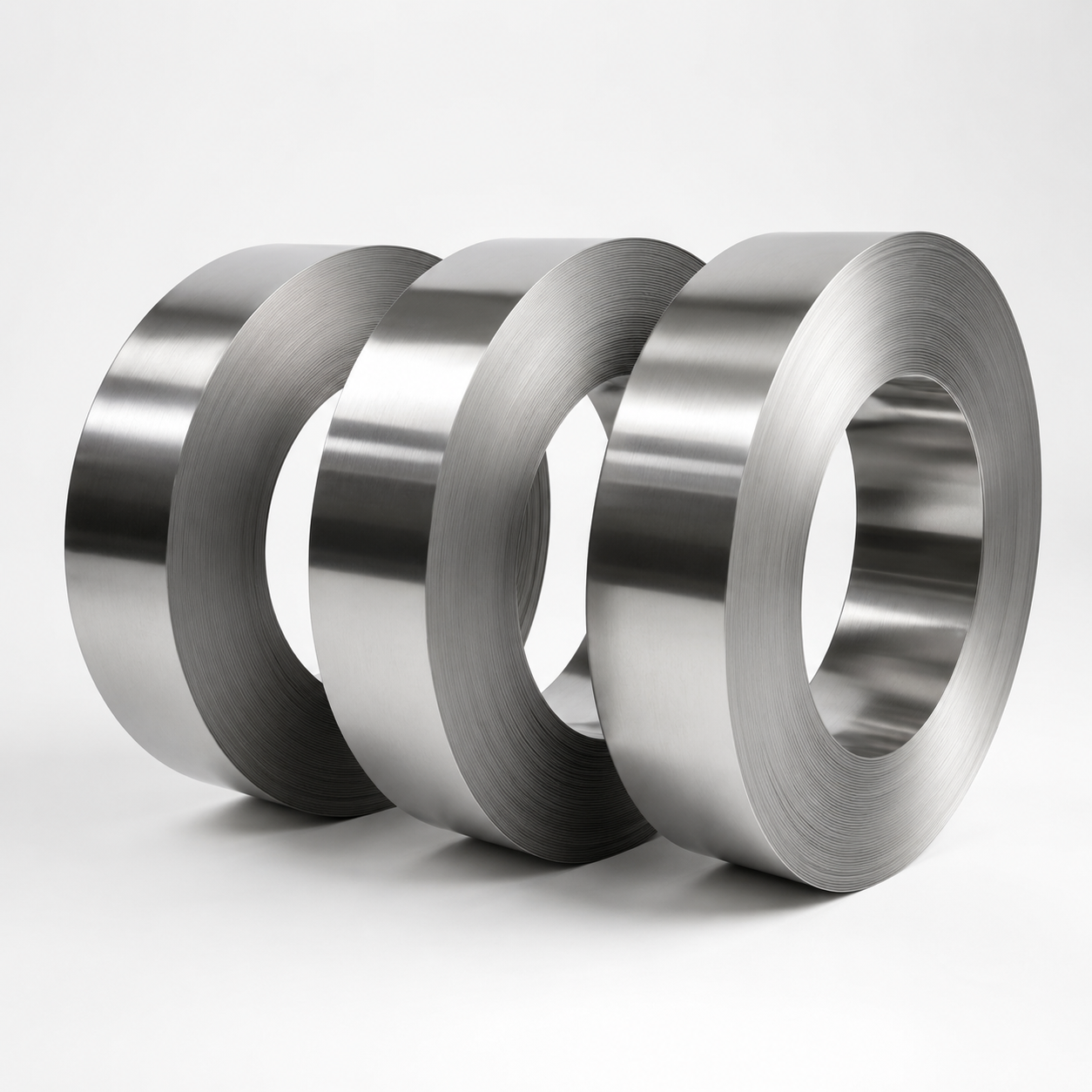
Product Introduction
Cold Rolled Stainless Steel Precision Strip
What Is Stainless Steel Strip?
Best For Precision Applications
Which Stainless Steel Strip Specification Should You Choose?
Choosing the right stainless steel strip depends on your final application, forming process, tolerance needs, surface requirements, and production volume. For precision stamping, electronics components, springs, clips, brackets, clamps, fasteners, and automotive parts, small differences in grade, thickness, width, hardness, and surface finish can affect production stability and final product quality.
Choose by Thickness and Width
For stainless steel strip, thickness and width directly affect stamping performance, bending stability, assembly accuracy, and material yield. Use thinner stainless steel strip for electronics components, small clips, terminals, springs, connectors, and precision stamped parts.
Use wider or thicker strip for brackets, clamps, automotive parts, industrial hardware, and structural components.Genn-Hann supports precision slitting from 4 mm to 650 mm width and thickness from 0.10 mm, depending on grade, finish, and production requirements.
Choose Stainless Steel Strip Grades
304 / 304L Stainless Steel
A widely used stainless steel strip grade for industrial parts, appliance components, hardware, and general precision manufacturing. 304L is suitable when lower carbon content or improved weldability is required.
316 / 316L Stainless Steel Strip
Suitable for applications requiring stronger corrosion resistance, especially in chemical, marine, medical, food processing, or chloride-related environments.
430 Stainless Steel Strip
A ferritic stainless steel grade with good heat resistance, magnetic properties, and cost-performance balance. Commonly used in appliance structures, decorative parts, panels, and hardware.
201 / 202 Stainless Steel
200 series stainless steel options for applications that need a balance of appearance, formability, strength, and cost efficiency.
409L / 439 Stainless Steel
Often used for automotive, heat-related, exhaust-related, and industrial applications where forming performance and heat resistance are important.
Choose by Hardness and Forming Requirement
Hardness affects whether the strip can be stamped, bent, formed, or used as an elastic component.
For deep forming, bending, or general stamping, customers may need softer or more formable material.
For springs, clips, terminals, and elastic parts, customers may need harder materials with better strength and rebound performance.
Before ordering, confirm whether your application requires soft material, 1/2H, 3/4H, full hard, or extra hard material.
Our Product Specifications
| Cold Rolled Stainless Steel Precision Slitting | |||||
|---|---|---|---|---|---|
| Surface Finish | Steel Grade | Thickness (mm) |
Mother Coil Width (mm) |
||
| 650 | 1219 | 1250 | |||
|
2B No.3 No.4 No.5 HL SB |
304 (1.4301) 304L (1.4307) |
0.10–0.20 | * | ||
| 0.30–3.00 | * | * | |||
|
316 (1.4401) 316L (1.4404) |
0.30–0.60 | * | |||
| 0.70–3.00 | * | * | |||
| 430 (1.4016) | 0.20–3.00 | * | * | ||
|
409 (1.4512) 439 (1.4510) |
0.30–2.00 | * | * | ||
|
201 (1.4372) (Ni: 1%) 202 (1.4373) (Ni: 4%) |
0.30–2.00 | * | * | ||
| 201 (1.4372) (Ni: 1%) | 0.20–1.00 | * | * | ||
| BA | 304 (1.4301) | 0.10–0.20 | * | ||
| 0.25–2.00 | * | * | |||
| 430 (1.4016) | 0.25–2.00 | * | * | ||
* Available mother coil width. Final production availability should be confirmed based on steel grade, surface finish, thickness, order quantity, and customer specifications.
Choose by Surface Finish
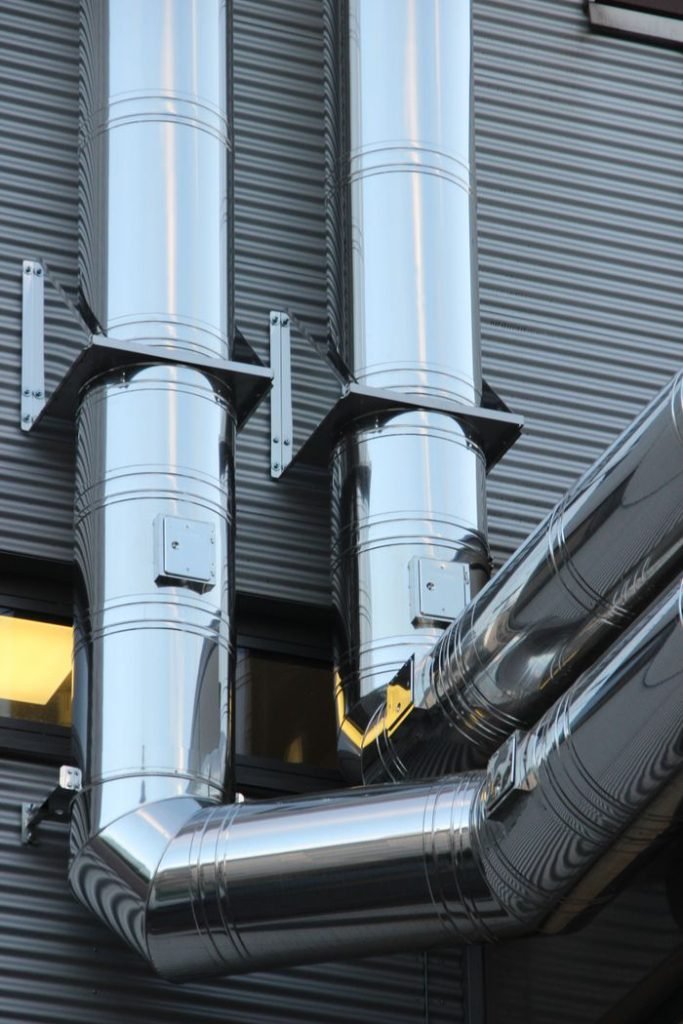
For Food Processing and Kitchen Equipment
Choose 2B or No.4 finish when cleanability, corrosion resistance, and a practical surface appearance are important.
For Home Appliances and Visible Panels
Choose BA, No.4, HL, or SB finish depending on whether the product requires a bright, brushed, linear, or satin appearance.
For Architecture and Interior Decoration
Choose HL, No.4, or SB finish for elevators, wall panels, facades, interior design, and premium visible surfaces.
For Chemical and Industrial Equipment
Choose No.1 or 2B finish when industrial performance, heat resistance, corrosion resistance, and function are more important than appearance.
For Precision Manufacturing
Choose the surface finish based on downstream stamping, bending, forming, polishing, coating, or assembly requirements.
cing elit. Ut elit tellus, luctus nec ullamcorper mattis, pulvinar dapibus leo.
faq
Common Questions About Stainless Steel Strip and Precision Slitting
Stainless steel strip is used for precision stamping, electronics components, springs, clips, brackets, clamps, fasteners, automotive parts, and small metal components. It is selected when manufacturers need narrow-width stainless steel with stable thickness, accurate strip width, corrosion resistance, and consistent material performance.
Stainless steel coil is supplied in wider coil form for general processing, while stainless steel strip is produced by precision slitting stainless steel coils into narrower widths. Stainless steel strip is better suited for stamping, forming, bending, springs, clips, connectors, fasteners, and small precision components.
Genn-Hann can provide precision stainless steel strip slitting down to 4 mm width, depending on stainless steel grade, thickness, hardness, surface finish, mother coil condition, and order requirements. Ultra-narrow stainless steel strip is commonly used for electronics components, springs, clips, terminals, and precision stamped parts.
Genn-Hann can process stainless steel strip from 0.10 mm thickness, depending on material grade, surface finish, hardness, and production requirements. Ultra-thin stainless steel strip is often used in electronics manufacturing, precision stamping, springs, connectors, clips, and small metal components.
Genn-Hann supplies 200, 300, and 400 series stainless steel strip grades, including 304, 304L, 316, 316L, 430, 409L, 439, 201, and 202. The right grade depends on corrosion resistance, formability, strength, heat resistance, surface requirement, application environment, and cost target.
Choose 304 / 304L for general industrial parts, appliances, hardware, and balanced corrosion resistance. Choose 316 / 316L when stronger corrosion resistance is required for chemical, marine, food processing, or chloride-related environments. Choose 301 for springs, connectors, and elastic components. Choose 430 for appliance structures, panels, and cost-efficient heat-resistant applications. Choose 409L / 439 for automotive and heat-related parts. Choose 201 / 202 when appearance, formability, and cost control are important.
Take Action